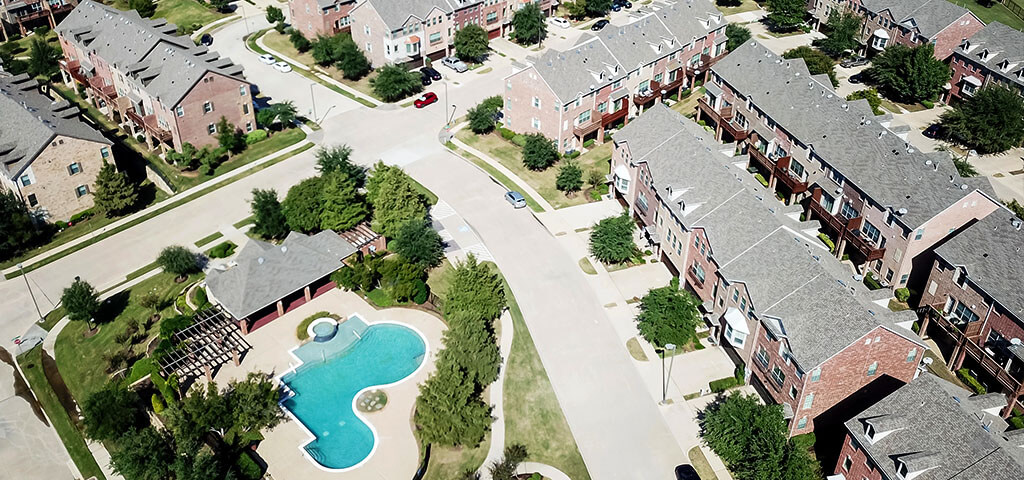
An HOA common area safety checklist can help board members and property managers inspect playgrounds, sidewalks, pools, lighting, fencing, drainage, and shared amenities before insurance renewal. They may want to know what common areas the association is responsible for, what amenities are available to residents, how often those areas are inspected, and whether prior injuries or claims have occurred.
We created this checklist to help HOA board members and property managers think through playgrounds, sidewalks, clubhouses, pools, parking areas, lighting, landscaping, and other shared spaces before insurance renewal time. Good maintenance does not guarantee a lower premium, but it can help reduce claims, improve underwriting conversations, and show that the association takes risk management seriously.
HOA property insurance is often designed to help cover association-owned property and common areas, while general liability coverage may help protect the association if someone is injured or property is damaged in a shared area.
Quick HOA Common Area Safety Checklist
Check playground surfacing depth and displacement
Inspect swings, slides, chains, bolts, rust, cracks, and sharp edges
Keep use zones clear of benches, fences, trees, and hard objects
Review sidewalks, parking lots, lighting, fencing, gates, and drainage
Keep repair logs, photos, vendor certificates, and incident reports
Review insurance coverage before renewal
Playground Surface
The surface under and around playground equipment is one of the most important safety items. Hard surfaces such as concrete, asphalt, grass, or dirt should not be directly under elevated playground equipment. Protective surfacing should be designed to absorb impact and should be maintained at the proper depth.
If your playground has loose-fill material such as engineered wood fiber, mulch, sand, pea gravel, or rubber mulch, it can move away from high-use areas. This often happens under swings, at slide exits, and near climbing equipment. These areas should be checked often, raked back into place, and refilled when needed.
Playground Equipment Condition
The HOA should inspect playground equipment for loose bolts, missing end caps, cracks, rust, rot, worn parts, vandalism, broken glass, and hazardous debris. These are the types of routine maintenance issues identified in the CPSC Public Playground Safety Handbook.
A small issue can become a larger claim if it is ignored. If a swing chain is worn, a handrail is loose, or a slide has a sharp edge, the board should document the issue, block off the equipment if needed, and schedule repairs as soon as possible.
Use Zones Around Equipment
Playground equipment should have enough open space around it so that children can use the equipment without hitting another structure, bench, fence, tree, or hard object. These open areas are often called use zones.
The CPSC recommends that use zones remain free of obstacles, and adjacent playground structures may require more space depending on the height of the play surfaces.
Slides, Swings, and Climbing Areas
Slides, swings, and climbing equipment usually receive more wear than other parts of the playground. Look for loose connections, worn chains, damaged seats, cracked plastic, exposed metal, splinters, and worn surfacing below the equipment.
Slide exits should be clear, smooth, and free from standing water or debris. Swing areas should have enough protective surfacing and should not be too close to benches, fences, walkways, or other equipment.
Age-Appropriate Equipment
Some playground equipment is designed for toddlers, some for preschool-age children, and some for school-age children. If the equipment is intended for a certain age group, signage should clearly explain that.
This helps parents understand the intended use and helps the HOA show that it has taken reasonable steps to communicate rules. The CPSC notes that public playground guidance applies to playgrounds used by children from 6 months through 12 years old, including playground areas at multiple-family dwellings such as apartment and condominium buildings.
Fencing and Access
If the playground is close to a street, parking lot, pond, retention area, pool, or driveway, the HOA should review whether fencing, gates, or barriers are adequate. Gates should close properly, latches should work, and damaged fencing should be repaired quickly.
Access control does not only apply to playgrounds. Clubhouses, fitness rooms, pools, storage rooms, rooftops, and maintenance areas should also be reviewed. A broken lock or unsecured gate can increase the risk of injury, vandalism, theft, or unauthorized use.
Walkways and Sidewalks
Common area sidewalks and walking paths should be checked for cracks, raised edges, potholes, loose pavers, drainage problems, ice, snow, leaves, and poor lighting. Slip-and-fall claims can be costly, especially if the association knew about the condition and did not respond.
The board should have a process for residents to report hazards. Each report should include the date, location, person reporting it, photos if available, and the action taken.
Lighting
Lighting should be checked in parking lots, sidewalks, mail areas, playgrounds, pool entrances, stairwells, hallways, garages, and clubhouse entrances. Poor lighting can increase the chance of falls, vandalism, theft, and personal safety concerns.
Burned-out lights should be replaced promptly. If an area is regularly used after dark, the board may want to review whether the lighting is strong enough for normal visibility.
Trees and Landscaping
Trees, shrubs, roots, and landscaping can create hazards when they are not maintained. Tree limbs should not hang over playground equipment in a way that creates a falling, impact, or entanglement hazard. The CPSC recommends installing equipment away from tree limbs, shade structures, or anything overhead that could create an impact, fall, or entanglement concern.
Roots can lift sidewalks. Bushes can block visibility near intersections, parking lots, or playgrounds. Irrigation leaks can create slippery areas. These items should be part of the HOA’s regular inspection routine.
Pool and Recreation Areas
If the HOA has a pool, splash pad, tennis court, basketball court, fitness room, or clubhouse, these areas should be included in the common area safety checklist.
The board should review posted rules, gates, locks, lighting, surface condition, furniture, emergency equipment, and contractor maintenance records. Pool areas should also be reviewed for local code compliance and any insurance requirements that apply to the association.
Drainage and Weather Hazards
Standing water can damage surfaces, create slip hazards, attract pests, and weaken playground surfacing. In colder climates, freezing can make playground surfacing less effective and create dangerous walking conditions.
The CPSC notes that loose-fill surfacing can lose effectiveness due to displacement, compaction, poor drainage, freezing, deterioration, and lack of maintenance.
The HOA should have seasonal procedures for snow removal, ice treatment, storm cleanup, fallen branches, clogged drains, and heavy rain inspections.
Inspection Schedule
A written inspection schedule helps the board stay consistent. The frequency will depend on how much the area is used, the age of the equipment, the type of surface, the local climate, and the manufacturer’s instructions.
A practical schedule may include quick visual inspections weekly or monthly, more detailed inspections quarterly, and a professional playground inspection annually or after major repairs. The CPSC recommends following manufacturer maintenance instructions and developing a maintenance schedule based on actual or expected playground use when manufacturer guidance is not available.
Repair Documentation
Inspections are only helpful if the HOA acts on the problems it finds. Each repair should be documented with the date, description, vendor, invoice, photos, and completion notes.
The CPSC recommends keeping records of playground maintenance inspections and repairs, including checklists used, signed and dated inspection forms, and records of reported accidents or injuries.
This documentation can be very helpful during an insurance renewal, after a claim, or when the board needs to show residents that maintenance decisions were handled responsibly.
Incident Reports
If someone is injured in a common area, the HOA should create an incident report as soon as possible. The report should include the date, time, location, names of people involved, weather conditions, photos, witness information, and what action was taken after the incident.
The board should not admit fault or promise coverage. Instead, it should document the facts, preserve records, notify the property manager, and contact the insurance agent or carrier as required by the policy.
Vendor Certificates
HOAs often rely on vendors for landscaping, snow removal, pool maintenance, playground installation, security, cleaning, and repairs. The board should keep current certificates of insurance for each vendor.
Depending on the work being performed, the HOA may also want written contracts, additional insured wording, workers’ compensation proof, and indemnification language reviewed by counsel. This can help reduce confusion if a vendor’s work contributes to a loss.
How This Can Help Premiums
Insurance premiums are affected by many things, including property values, replacement cost, location, construction, amenities, claims history, coverage limits, deductibles, and the insurance market. A checklist does not automatically reduce the premium.
However, a well-maintained community may be more attractive to underwriters than a community with missing records, unrepaired hazards, repeated claims, or unclear procedures. Safety records can help tell a better story about the association’s risk.
Insurance Review
Before renewal, the board should review its HOA master policy, general liability insurance, umbrella or excess liability coverage, D&O insurance, crime or fidelity coverage, workers’ compensation, and any special coverage needed for pools, playgrounds, gates, equipment, or common buildings.
Frequently Asked Questions
What should an HOA include in a playground safety checklist?
An HOA playground safety checklist should include surfacing, equipment condition, use zones, swings, slides, climbing areas, drainage, fencing, signage, lighting, repair logs, and incident reports.
Can a safety checklist lower HOA insurance premiums?
A checklist does not guarantee lower premiums, but it may help reduce claims, improve documentation, and support a stronger underwriting presentation at renewal.
How often should an HOA inspect playground equipment?
The inspection schedule depends on the age of the equipment, how often it is used, local weather, and manufacturer instructions. Many associations use frequent visual checks, quarterly detailed reviews, and annual professional inspections.
Who is responsible for HOA common area safety?
The HOA board is generally responsible for maintaining association-owned common areas, often with help from a property manager, maintenance vendors, and insurance professionals.
What records should an HOA keep for playground and common area safety?
The HOA should keep inspection checklists, repair invoices, vendor certificates of insurance, photos, maintenance schedules, incident reports, and board decisions related to safety repairs.
At StarNet Insurance Group, we’re here to help HOA boards and property managers navigate the complexities of HOA property insurance, liability coverage, and risk management. Please feel free to contact us with any questions you may have.